 Pin It
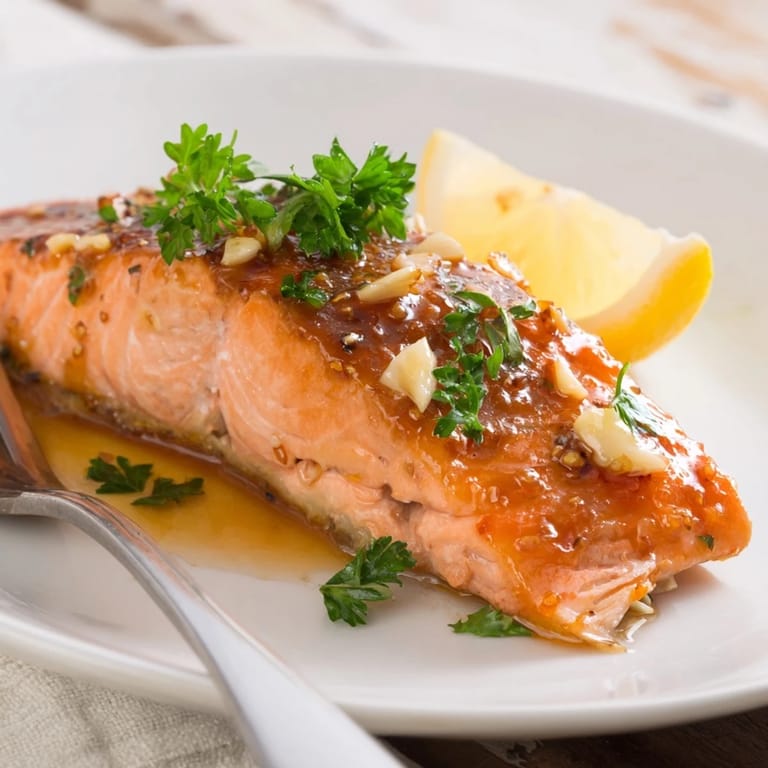
 My neighbor knocked on my door one Tuesday evening holding a slab of salmon and asking if I had any ideas. I had twenty minutes before a work call and barely anything in the pantry, but I grabbed honey, garlic, and butter without thinking. What came out of the oven fifteen minutes later made her pause mid-bite and ask for the recipe, which didn't exist yet. That improvised glaze became something I now make at least twice a month.
I made this for my parents the first time they visited my new apartment. My dad, who usually drowns fish in tartar sauce, ate his piece without saying a word, then reached over and forked a bite from my mom's plate. She laughed and told me I'd finally learned to cook something that wasn't pasta. That quiet approval meant more than any compliment.
Ingredients
- Salmon fillets (about 170 g or 6 oz each), skin-on or skinless: Look for fillets that are even in thickness so they cook at the same rate, and pat them completely dry before seasoning or the glaze will slide right off.
- Salt and freshly ground black pepper: Just a light touch on both sides is enough, the glaze brings its own punch of flavor.
- Honey: Use a good quality honey that you'd actually want to taste on its own, it becomes the soul of the glaze and cheap honey can taste metallic.
- Unsalted butter, melted: Melted butter blends smoothly into the glaze and helps it cling to the salmon while adding richness.
- Garlic, minced: Fresh garlic is non-negotiable here, the jarred stuff just doesn't have the same aromatic sweetness when it roasts.
- Soy sauce: This adds umami depth and a little saltiness, use gluten-free soy sauce or tamari if you need to keep it gluten-free.
- Fresh lemon juice: The acidity cuts through the richness and keeps the glaze from feeling too heavy.
- Dijon mustard (optional): A teaspoon adds a subtle tang and helps emulsify the glaze, but you can skip it if you don't have any on hand.
- Fresh parsley, chopped: A small handful of green brightens the plate and adds a hint of freshness.
- Lemon wedges: Always serve these on the side, a squeeze of extra lemon right before eating wakes up every flavor.
Tired of Takeout? 🥡
Get 10 meals you can make faster than delivery arrives. Seriously.
One email. No spam. Unsubscribe anytime.
Instructions
- Prep the oven and tray:
- Preheat your oven to 200°C (400°F) and line a baking tray with parchment paper or give it a light coat of oil. This step is easy to forget, but starting with a hot oven makes all the difference in getting that caramelized crust.
- Season the salmon:
- Pat the salmon fillets completely dry with paper towels, then arrange them on the tray and season both sides lightly with salt and pepper. Drying them first helps the seasoning stick and the glaze caramelize instead of steaming.
- Make the glaze:
- In a small bowl, whisk together the honey, melted butter, minced garlic, soy sauce, lemon juice, and Dijon mustard if you're using it. Whisk until everything is smooth and the honey is fully incorporated.
- Brush the salmon:
- Use a pastry brush to coat the top and sides of each fillet generously with the glaze, making sure the garlic bits are spread evenly. Don't worry if it seems like a lot, it will reduce and thicken as it roasts.
- Roast the salmon:
- Slide the tray into the preheated oven and roast for 12 to 15 minutes, depending on the thickness of your fillets, until the salmon flakes easily with a fork. The glaze should be bubbling and starting to caramelize around the edges.
- Optional broil for extra caramelization:
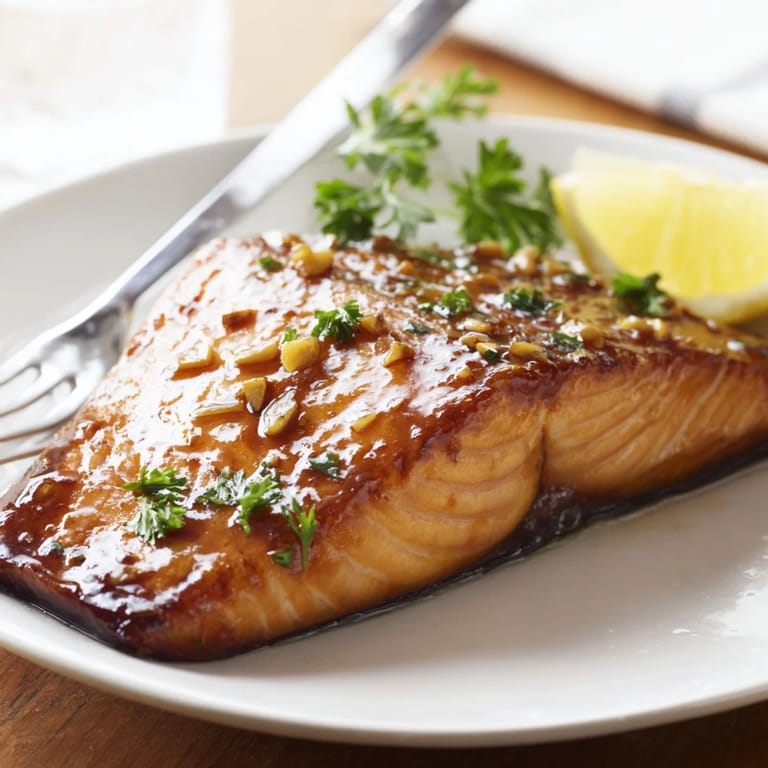
- If you want a deeper golden crust, switch the oven to broil or grill for the final 1 to 2 minutes, but stay close and watch carefully so it doesn't burn. The line between caramelized and charred is thin.
- Finish and serve:
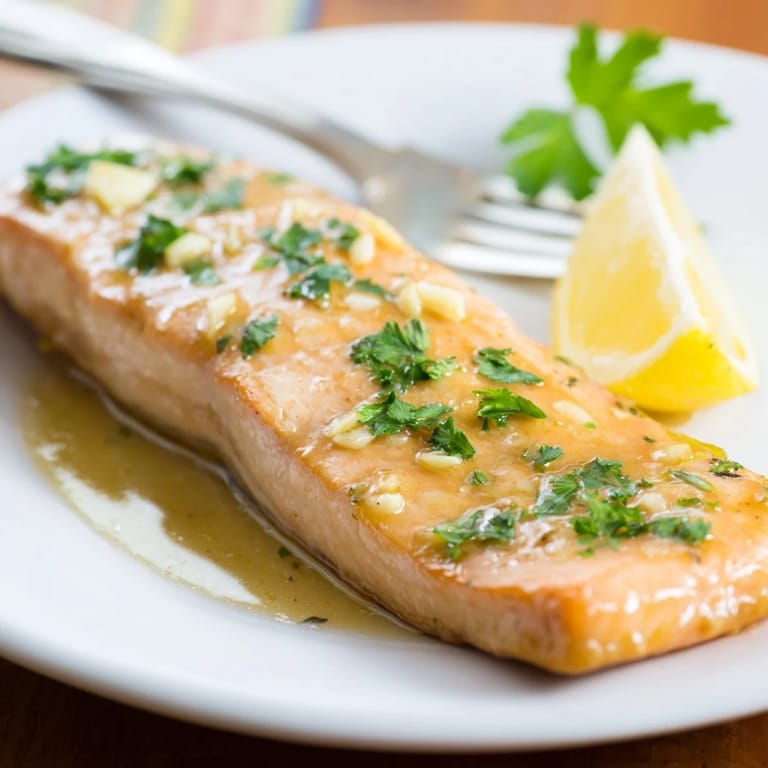
- Remove the tray from the oven and spoon any sticky juices from the pan over the top of each fillet, then sprinkle with fresh parsley. Serve immediately with lemon wedges on the side.
 Pin It
 A friend who claimed she didn't like fish tried this at a dinner party and went silent for a moment before asking what kind of salmon it was, as if the variety mattered more than the glaze. I didn't have the heart to tell her it was just the regular stuff from the grocery store. Sometimes it's not about fancy ingredients, it's about knowing what to do with them.
Choosing Your Salmon
I've made this with wild-caught sockeye, farmed Atlantic, and even frozen fillets I thawed in the fridge overnight. The glaze is forgiving enough that it makes any type taste good, but thicker fillets hold up better under the broiler if you're going for that extra caramelization. If you're buying skin-on, ask the fishmonger to check for pin bones, pulling them out yourself with tweezers is annoying but worth the two minutes.
Serving Suggestions
I usually serve this over a mound of jasmine rice or alongside roasted asparagus that's been tossed in olive oil and salt. The glaze drips down and flavors whatever's underneath, so don't waste it. A crisp green salad with a lemon vinaigrette on the side keeps things light, and crusty bread for soaking up any leftover pan juices is never a bad idea.
Adjusting the Glaze
The first time I made this, I forgot the lemon juice and the glaze tasted flat and overly sweet. Now I know that the acidity is what makes everything sing. If you like heat, a pinch of crushed red pepper flakes or a drizzle of sriracha stirred into the glaze adds a nice kick without overwhelming the honey and garlic.
- Swap honey for maple syrup if you want a deeper, earthier sweetness.
- Add a teaspoon of grated fresh ginger to the glaze for a subtle zing.
- Use tamari instead of soy sauce to keep it gluten-free, the flavor is nearly identical.
 Pin It
 This recipe taught me that weeknight dinners don't have to be boring or complicated, sometimes all you need is a good piece of fish and a handful of pantry staples. I hope it becomes one of those recipes you reach for without thinking, the kind that feels like home.
Recipe FAQs
- → How do I know when the salmon is cooked through?
The salmon is cooked through when it flakes easily with a fork and the flesh is opaque throughout. This typically takes 12-15 minutes at 200°C (400°F). You can also check that the internal temperature reaches 63°C (145°F) using a food thermometer.
- → Can I use skinless salmon fillets?
Yes, absolutely. Both skin-on and skinless salmon fillets work beautifully with this glaze. Skin-on fillets help retain moisture during cooking, while skinless fillets cook slightly faster and may benefit from a bit more butter in the glaze.
- → What can I substitute for soy sauce?
Tamari or coconut aminos provide excellent gluten-free alternatives with similar umami depth. If neither is available, you can reduce the amount and add a pinch of salt instead, though the glaze will be less savory.
- → How should I store leftover salmon?
Store cooked salmon in an airtight container in the refrigerator for up to 3 days. Reheat gently in a 160°C (320°F) oven for about 5-7 minutes to prevent drying out. You can also enjoy it cold the next day as part of a salad.
- → Why do I need to pat the salmon dry?
Patting the salmon dry helps the glaze adhere better and promotes even browning and caramelization. Excess moisture on the surface can prevent the honey and butter glaze from creating that beautiful caramelized exterior.
- → Can this glaze work with other fish?
Absolutely. This honey garlic glaze complements other fatty fish beautifully, such as mackerel, trout, or halibut. Adjust cooking times based on fillet thickness to ensure proper doneness.