 Pin It
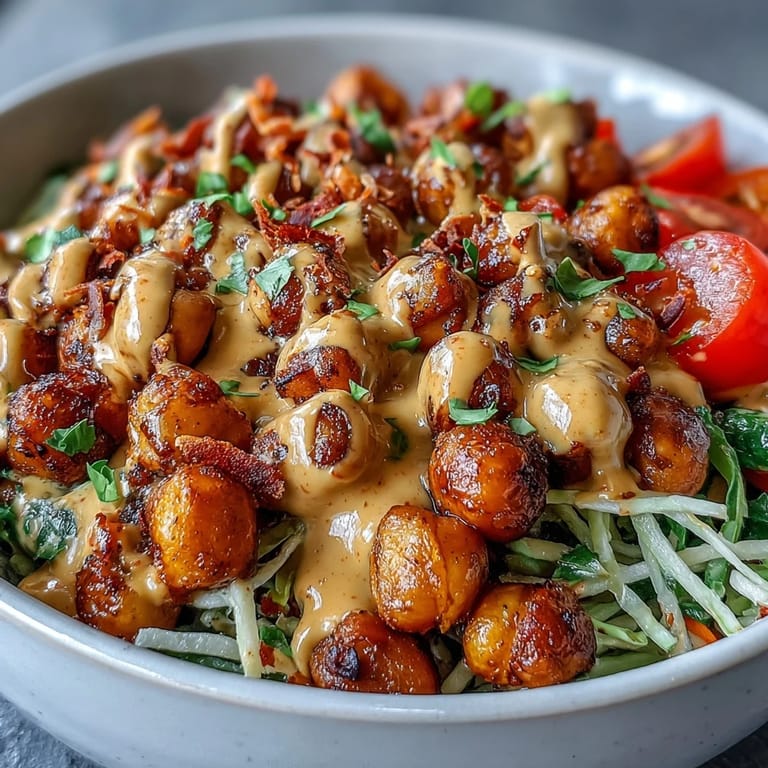
 I stumbled onto this bowl during a rushed Tuesday afternoon when my usual lunch routine felt stale. The oven was already warm from reheating something else, so I tossed chickpeas with whatever spices were within arm's reach and let them crisp up while I chopped vegetables on autopilot. What emerged was surprisingly satisfying—crispy, nutty, loaded with color, and tied together with a peanut sauce that tasted like it had been simmering in my mind for weeks. Now it's become my go-to when I need something that feels indulgent but leaves me genuinely nourished, not sluggish.
I made this for my friend who'd just gone vegetarian and wasn't sure how to make meals feel substantial. She took one bite, paused, and said something like, "Wait, where's the chicken?" in a confused way that made me laugh. She ate the whole bowl and asked for the recipe before dessert, which told me everything I needed to know about whether it actually works.
Ingredients
- Chickpeas (2 cans, drained and rinsed): The backbone of this bowl—they absorb spices beautifully and become crispy on the edges if you don't crowd the baking sheet.
- Olive oil (1 tbsp): Just enough to coat and help them crisp without making them greasy; don't skimp here.
- Smoked paprika, cumin, garlic powder, salt and pepper: This combination builds depth—the paprika is the star that makes people ask what you added.
- Brown rice or quinoa (2 cups cooked): Use whatever you have; quinoa feels fancier but rice is more forgiving and equally delicious.
- Red cabbage, carrots, cucumber, cherry tomatoes, edamame (1 cup each or as listed): The vegetables stay crisp and bright if you prep them just before assembly, creating contrast against the warm chickpeas.
- Fresh cilantro (1/4 cup chopped): Not optional—it lifts everything and adds a freshness that ties the whole bowl together.
- Creamy peanut butter (1/3 cup): Use natural peanut butter if it's smooth enough; the sauce should drizzle, not gloop.
- Soy sauce or tamari (2 tbsp): This adds saltiness and umami depth; tamari keeps it gluten-free if that matters to you.
- Maple syrup or honey (1 tbsp): A touch of sweetness balances the salty and spicy elements without making it cloying.
- Rice vinegar (1 tbsp): The acid brightens everything and keeps the sauce from feeling one-note.
- Sriracha (1 tsp, optional): Add this if you want heat; leave it out if you're feeding someone who prefers things mild.
- Garlic, minced (1 clove): Fresh garlic matters more here than you'd think—it wakes up the peanut sauce.
- Warm water (2-4 tbsp): Start with 2 and add slowly until the sauce reaches the right consistency for drizzling.
- Roasted peanuts and sesame seeds (toppings): The crunch is essential; it's what makes each spoonful interesting to eat.
- Lime wedges: Squeeze them over just before eating to brighten everything at the last moment.
Tired of Takeout? 🥡
Get 10 meals you can make faster than delivery arrives. Seriously.
One email. No spam. Unsubscribe anytime.
Instructions
- Heat your oven and prep:
- Turn the oven to 425°F and line a baking sheet with parchment paper. This keeps cleanup minimal and prevents sticking.
- Season and roast the chickpeas:
- Toss drained chickpeas with olive oil, smoked paprika, cumin, garlic powder, salt, and pepper until everything is evenly coated. Spread them in a single layer on the baking sheet and roast for 20–25 minutes, shaking the pan halfway through—they'll turn golden, smell incredible, and develop crispy edges that make all the difference.
- Make the peanut sauce:
- While chickpeas roast, whisk together peanut butter, soy sauce, maple syrup, rice vinegar, sriracha if using, minced garlic, and 2 tablespoons of warm water. Whisk until smooth, adding more water a little at a time until you reach a pourable consistency—thicker than a vinaigrette but looser than straight peanut butter.
- Prepare your grains and vegetables:
- Cook rice or quinoa according to package directions if you haven't already. Slice and chop vegetables into bite-sized pieces—this is meditative work that sets you up for easy assembly.
- Assemble your bowls:
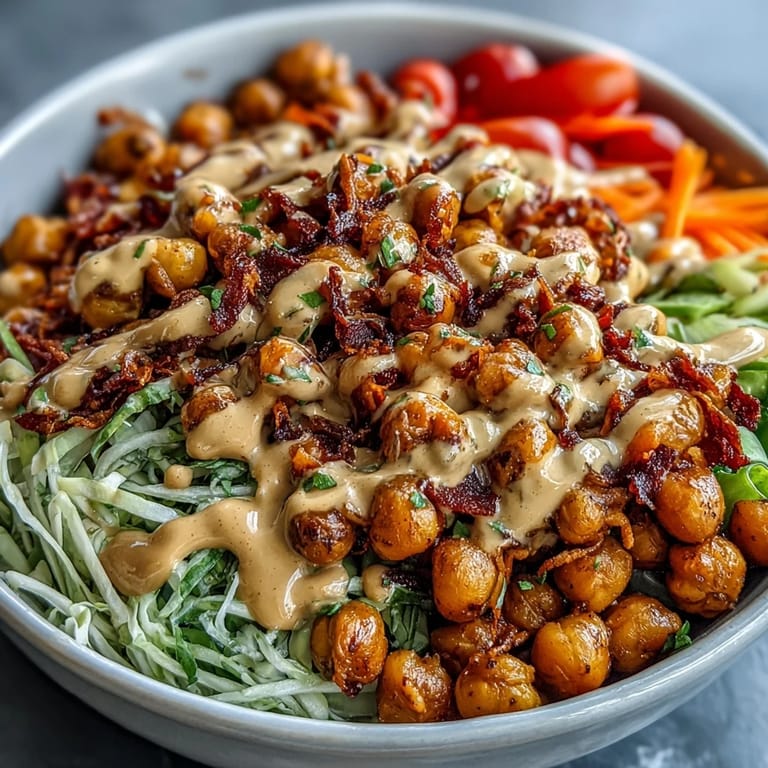
- Divide cooked grains among 4 bowls, then arrange roasted chickpeas, shredded red cabbage, julienned carrots, sliced cucumber, halved cherry tomatoes, edamame, and cilantro on top. Think of this as building layers of color and texture.
- Finish with sauce and toppings:
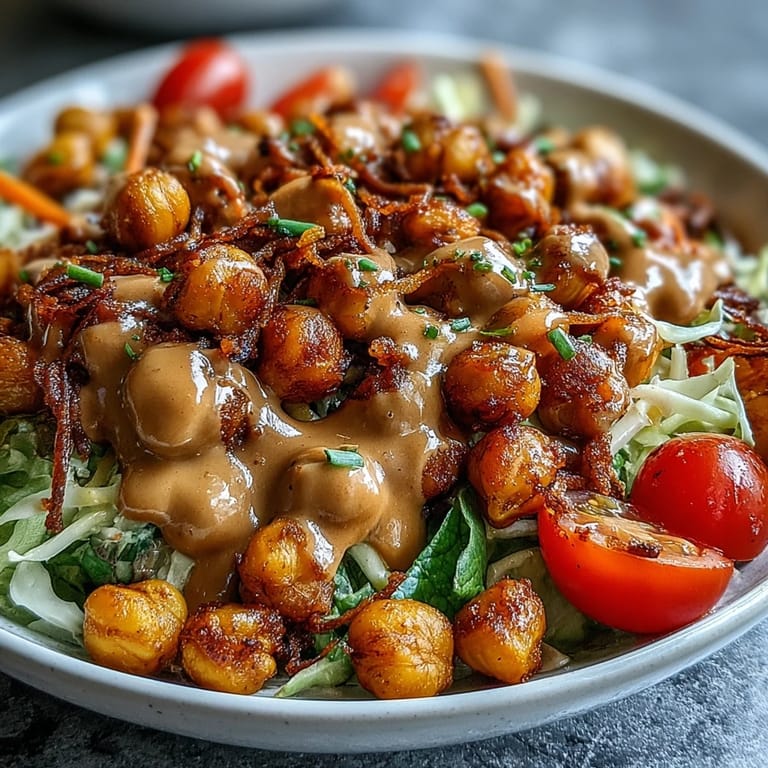
- Drizzle peanut sauce generously over everything, then scatter chopped roasted peanuts and sesame seeds on top. Serve with lime wedges and squeeze fresh lime juice just before eating.
 Pin It
 My partner brought this bowl to work and came back saying someone literally asked where they got it catered from. That's when I realized it's not just nourishing—it looks and tastes intentional enough to impress, even though it barely took any effort. It's become the recipe I make when I want to feel proud of feeding myself well.
Why This Bowl Works Every Time
There's a formula here that feels balanced without being boring. You've got something warm and substantial in the grains and chickpeas, something cool and crisp in the vegetables, something nutty and rich in the sauce, and enough texture from the peanuts and sesame that every bite stays interesting. The acid from lime and vinegar keeps it from feeling heavy, and the cilantro adds that final note of brightness that makes you want another spoonful.
Make-Ahead and Storage Wisdom
You can roast the chickpeas up to three days ahead and store them in an airtight container—they actually stay crispier than you'd expect. The peanut sauce keeps for about five days in the fridge, though it will thicken, so loosen it with warm water when you reheat. Vegetables are best prepped the morning you're eating, but the grain can be cooked the night before and eaten cold or gently reheated.
Variations That Actually Work
This bowl is forgiving in the best way. Add a handful of baby spinach or kale for extra greens if you want more volume without changing the flavor balance. Swap the brown rice for cauliflower rice if you're looking for lower carbs—the peanut sauce carries the whole thing, so the base becomes secondary. You can also play with the vegetables based on what's in season or what you have on hand; bell peppers, shredded beets, or snap peas all work beautifully alongside what's already here.
- Try a drizzle of sesame oil on top for an extra layer of nuttiness.
- If you have access to gochujang, replace half the peanut butter with it for deeper umami and gentle heat.
- Serve it slightly warm or chilled depending on the weather and your mood.
 Pin It
 This is the kind of meal that disappears quietly and leaves you satisfied without feeling stuffed. Once you've made it once, you'll understand why it stays in rotation.
Recipe FAQs
- → Can I make the chickpeas ahead of time?
Yes, roast the chickpeas up to 3 days in advance and store in an airtight container. They'll stay crisp and can be reheated briefly at 400°F for 5 minutes before serving.
- → What can I substitute for peanut butter?
Almond butter, cashew butter, or sunflower seed butter work well as alternatives. Tahini also creates a delicious sauce, though the flavor profile will be slightly different.
- → Is this bowl freezer-friendly?
The components freeze separately well. Roasted chickpeas and cooked grains freeze for up to 3 months. Store sauce in the refrigerator and add fresh vegetables when assembling.
- → How can I add more protein?
Increase protein by adding grilled tofu, tempeh, or baked chicken. Extra edamame, hemp seeds sprinkled on top, or serving with a side of lentils also boosts protein content.
- → Can I use raw vegetables instead of fresh?
Frozen vegetables work well—thaw and drain them before adding. Avoid using frozen cucumber or cabbage as they become too soft. Stick to fresh for these crisp vegetables.
- → How long does the peanut sauce last?
The sauce keeps in the refrigerator for up to 1 week in a sealed container. It may thicken when cold—simply whisk in a teaspoon of warm water to reach desired consistency.