 Pin It
 One Tuesday afternoon, I stood in my kitchen staring at a half-empty pantry and a very real hunger. Quinoa, chickpeas, whatever vegetables hadn't wilted in the crisper drawer—suddenly it clicked that these scattered ingredients could become something I actually wanted to eat, not just something to get through. That's when the chickpea power bowl was born, not from a recipe but from necessity and the quiet satisfaction of making something colorful and nourishing from what was already there.
I made this for my friend Maya on a rainy Saturday when she mentioned feeling stuck in a food rut, and watching her face light up as she drizzled that tahini sauce reminded me why I keep coming back to this bowl. She ate the whole thing without looking up, then asked for the recipe—that's the moment I knew it had crossed from my kitchen into something worth sharing.
Ingredients
- Quinoa or Brown Rice: I use quinoa because it cooks faster and has a pleasant nuttiness, but brown rice works beautifully too if you have the time—just know it'll take nearly twice as long.
- Chickpeas: Canned and drained is perfectly fine; rinse them well to remove excess sodium and they'll crisp up nicely when roasted.
- Sweet Potato: The sweetness balances the spices on the chickpeas and adds natural caramelization when hit with high heat.
- Red Bell Pepper: Choose one that feels heavy for its size; these tend to be juicier and sweeter than the lighter ones.
- Zucchini: Slice it on the thicker side so it doesn't turn into mush by the time everything is roasted.
- Red Onion: The raw crunch mellows slightly during roasting but keeps enough bite to balance the creamy sauce.
- Tahini: This is the soul of the bowl—invest in good tahini because the flavor really matters here, and store it in the fridge after opening so the oil doesn't separate as quickly.
- Smoked Paprika: Regular paprika works if that's what you have, but smoked paprika adds a depth that makes these chickpeas feel intentional rather than an afterthought.
Tired of Takeout? 🥡
Get 10 meals you can make faster than delivery arrives. Seriously.
One email. No spam. Unsubscribe anytime.
Instructions
- Get Your Oven Hot and Grains Going:
- Preheat to 425°F while you rinse your grains under cold water until the water runs mostly clear—this removes excess starch and keeps everything from glueing together. Combine with broth in a saucepan, bring to a boil, then lower the heat and let it simmer covered.
- Toss Your Vegetables:
- While the grains are cooking, cut your sweet potato into bite-sized pieces, chop the bell pepper, slice the zucchini into half-moons, and slice your red onion into thin crescents. Toss everything with olive oil, salt, and pepper on a baking sheet, spreading in a single layer.
- Season Those Chickpeas:
- Pat your drained chickpeas dry with a clean towel—this is the secret to getting them crispy instead of steamed. Toss with olive oil and your spice blend, then spread on a separate baking sheet so they roast evenly.
- Roast Everything Together:
- Get both sheets in the oven at the same time; the chickpeas need about 15 to 20 minutes while the vegetables take 20 to 25, so you might need to pull the chickpeas out first. Shake the baking sheets halfway through so nothing sticks to the bottom.
- Whisk Your Tahini Sauce:
- In a small bowl, whisk together tahini, fresh lemon juice, minced garlic, and salt, adding water one tablespoon at a time until you reach the consistency of thick Greek yogurt. Taste and adjust the lemon or salt as needed—this is where the brightness lives.
- Assemble Your Bowl:
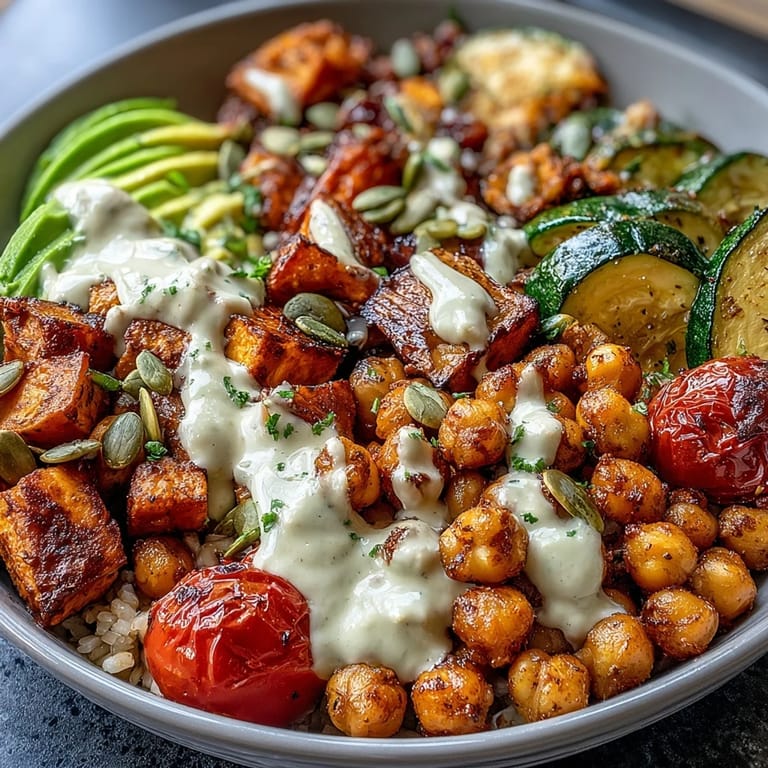
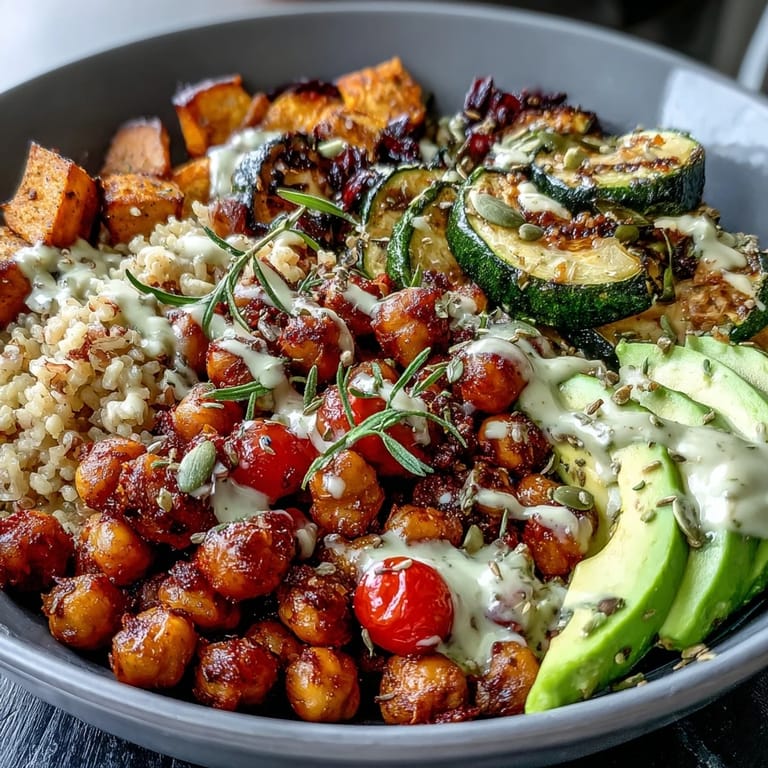
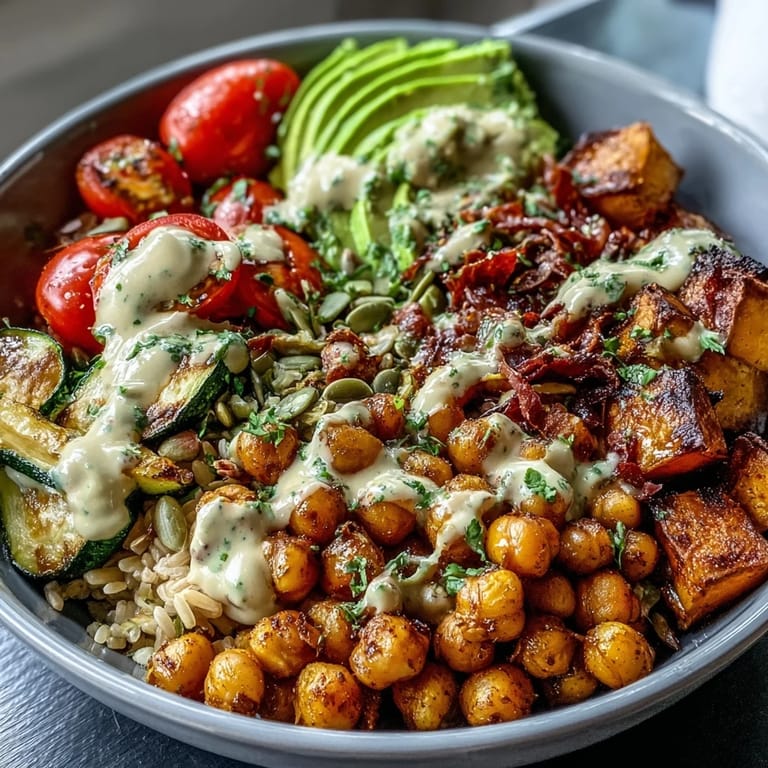
- Start with a base of warm grains, then arrange your roasted vegetables and crispy chickpeas on top, leaving room for the fresh toppings. Add halved cherry tomatoes, sliced avocado, fresh herbs, and seeds if you're using them.
- Finish and Serve:
- Drizzle the tahini sauce generously over everything, letting it pool slightly so you get some with every bite. Serve immediately while the grains and roasted vegetables still have some warmth.
 Pin It
 My sister brought her new partner over for dinner and he asked for thirds, which tells you everything—this bowl works for people who think they don't like healthy food and people who live for it. That's the real power of it.
Why the Tahini Sauce Changes Everything
I used to make similar bowls with a simple olive oil and lemon dressing, and they were fine but forgettable. The tahini transforms it from a collection of ingredients into something that feels intentional and complete—the creaminess wraps around the vegetables, the garlic adds whispered depth, and the lemon keeps it from ever feeling heavy.
Building Your Own Bowl Variations
Once you understand the architecture of this bowl, you start seeing variations everywhere. In winter I swap the zucchini for roasted Brussels sprouts, or replace the red onion with beets for earthiness and color. The tahini sauce works with any grain and any vegetable combination you can think of.
Storage and Make-Ahead Tips
I've learned the hard way that these bowls are best eaten fresh, with everything warm and the avocado unoxidized. If you're meal prepping, keep components separate and assemble just before eating—the grains and roasted vegetables will keep in the fridge for three days in an airtight container. The tahini sauce also holds for up to five days, which means you could make the whole thing in minutes on a busy weeknight.
- Make your tahini sauce at the beginning of the week so it's ready whenever you need that creamy richness.
- Roast your vegetables and chickpeas on Sunday and you'll have hot bowl components ready to assemble any night.
- Cut avocado just before serving so it stays bright green and doesn't turn that sad brown color.
 Pin It
 This bowl has become my answer to the question of what to make when you want something that feels nourishing without tasting like obligation. It's proof that simple ingredients, when treated with a little intention, become something worth remembering.
Recipe FAQs
- → Can I prepare this ahead of time?
Yes. Cook grains and roast vegetables up to 3 days ahead. Store components separately in airtight containers. Assemble bowls fresh and drizzle with sauce before serving.
- → What other grains work well?
Farro, bulgur, barley, or cauliflower rice make excellent substitutes. Adjust cooking times accordingly. Each grain brings slightly different texture and nutritional profile.
- → How do I make it gluten-free?
Use certified gluten-free quinoa or brown rice. Check all spice blends and condiment labels for hidden gluten sources. The tahini sauce naturally contains no gluten.
- → Can I add protein besides chickpeas?
Grilled chicken, roasted salmon, or hard-boiled eggs complement these flavors beautifully. For plant-based options, try tempeh or extra hemp hearts sprinkled on top.
- → How long does tahini sauce keep?
Refrigerate up to one week in a sealed jar. The sauce may thicken—simply whisk in a splash of water to restore creamy consistency before using.
- → What vegetables roast best?
Sweet potato, bell peppers, zucchini, red onion, cauliflower, and eggplant all roast beautifully. Cut pieces uniformly for even cooking and caramelization.