 Pin It
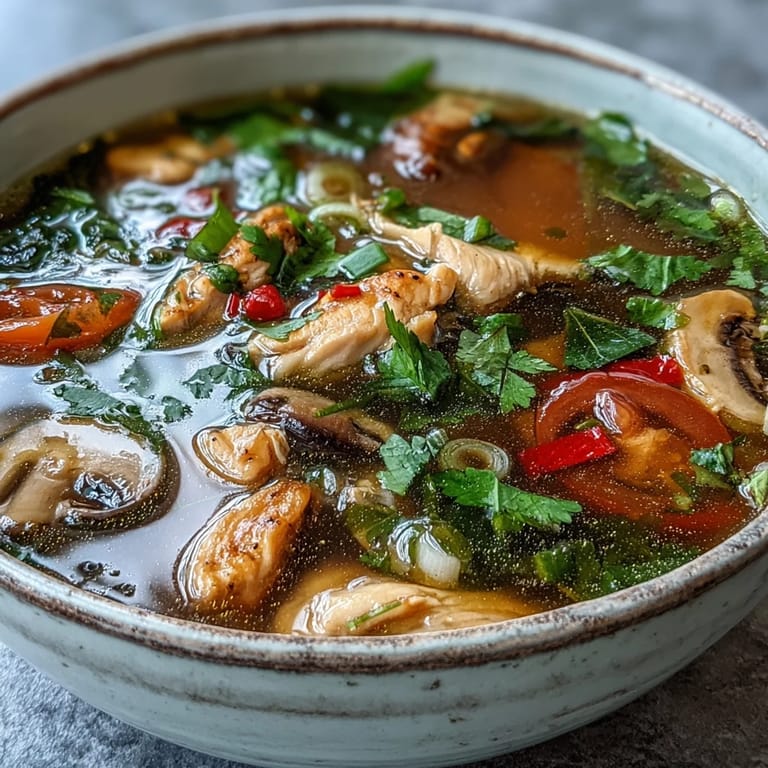
 My first bowl of Tom Yum arrived at a small shophouse in Bangkok, served in a chipped ceramic bowl that still held the heat of the broth. The smell hit me before the spoon touched my lips—lemongrass and lime cutting through the steam, with a whisper of heat that made my eyes water in the best way. Years later, I found myself chasing that exact sensation in my own kitchen, learning that the magic wasn't in fancy equipment but in understanding how to coax every bit of flavor from humble aromatics and a bit of patience.
I made this for a friend who was convinced she hated cilantro, and halfway through her first bowl, she asked what that herbal brightness was. When I told her, she laughed and kept eating anyway, and somehow that small moment of discovery over soup became a running joke between us—proof that food tastes different when someone else made it with care.
Ingredients
- Chicken thighs or breasts (400 g, thinly sliced): Thighs stay juicier and more forgiving than breasts, though both work—slice against the grain so each piece melts on your tongue rather than chewy.
- Chicken stock (1.2 liters): Use homemade if you have it, but a good quality store-bought stock means the broth will actually taste like something worth sipping.
- Lemongrass (2 stalks, trimmed and smashed): This is non-negotiable—it's the backbone of Tom Yum, and smashing it before adding releases those citrusy, floral oils that make the whole pot sing.
- Fresh galangal (4 slices) or dried (2 tsp): If you can find fresh, use it; the peppery warmth it brings is impossible to replicate, though dried works in a pinch.
- Makrut lime leaves (5, torn): These aren't regular limes—they're fragrant and slightly bitter, and tearing them by hand releases more aroma than cutting.
- Birds eye chilies (4, lightly crushed): Don't skip the crushing step; it wakes up the heat so the spice spreads evenly through the broth instead of hiding in one corner of the pot.
- Mushrooms (150 g, sliced): Oyster or button work beautifully—they absorb the broth and add earthiness that balances the brightness.
- Tomatoes (2 medium, cut into wedges): Fresh tomatoes matter here; they soften into the soup and add a subtle sweetness that rounds out all that acid and heat.
- Onion and garlic (1 small onion sliced, 3 cloves smashed): Smashed garlic dissolves into the broth, while the onion stays slightly textured—together they form an aromatic foundation.
- Fish sauce (3 tbsp): This is the secret weapon that makes people say the broth tastes restaurant-quality; it's pungent on its own but becomes savory magic once heated.
- Lime juice (2 tbsp fresh): Squeeze it right before adding so the acid stays bright; bottled juice tastes flat by comparison.
- Sugar and salt: Just enough sugar to balance the sour and spicy, and salt to bring everything into focus.
Tired of Takeout? 🥡
Get 10 meals you can make faster than delivery arrives. Seriously.
One email. No spam. Unsubscribe anytime.
Instructions
- Awaken the aromatics:
- Grab your lemongrass stalks and use the flat side of your knife to crush them firmly—you'll hear a crack and instantly smell that citrusy, almost floral aroma release. Do the same with the galangal slices; this bruising step is what separates a flat-tasting broth from one that makes people close their eyes while eating.
- Build the flavor base:
- Bring your stock to a rolling boil in a large pot, then add the smashed lemongrass, galangal, torn lime leaves, crushed chilies, and garlic. Let it simmer uncovered for 5 minutes—your kitchen will smell like a Thai night market, and you'll know the aromatics are infusing properly when the broth takes on a golden hue and the steam carries that complex, slightly peppery warmth.
- Cook the chicken gently:
- Add your sliced chicken and onion, keeping the heat at a gentle simmer so the broth stays clear and the chicken doesn't toughen up. Skim away any foam that rises to the surface during the first few minutes—this takes only a moment but makes the final soup look restaurant-clean.
- Finish with vegetables:
- After 8–10 minutes, when the chicken is almost cooked through, add your mushrooms and tomato wedges. They'll soften into the broth in 5–7 minutes, soaking up all that flavor while adding texture and subtle sweetness.
- Season to your taste:
- Here's where intuition matters more than measuring—stir in the fish sauce, lime juice, sugar, and salt, then taste. The broth should make your mouth water (sour), warm your chest (spicy), and feel savory without tasting salty. Add more lime if it feels flat, a pinch more sugar if the sourness overwhelms you, or another splash of fish sauce if it needs depth.
- Finish and serve:
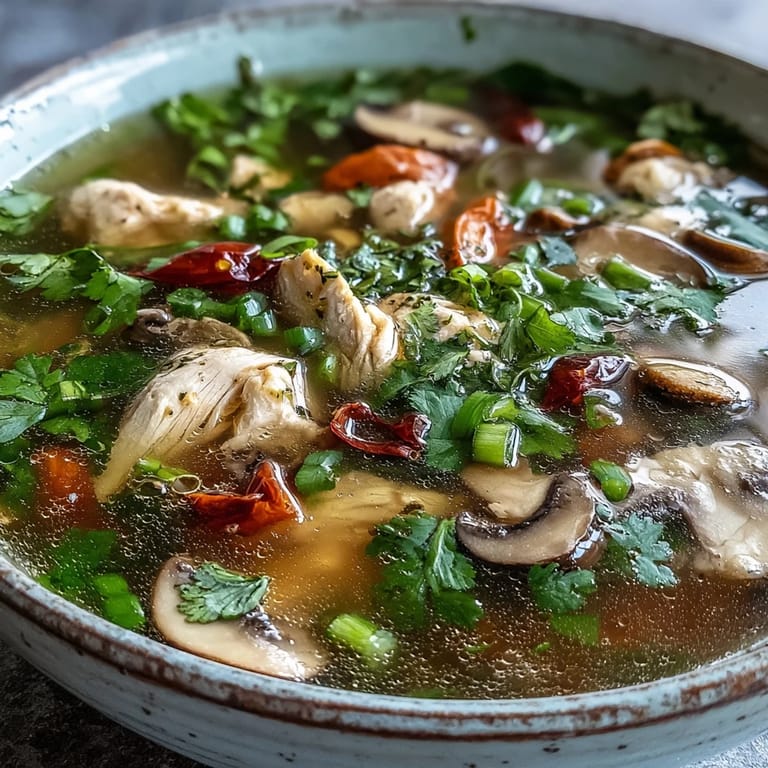
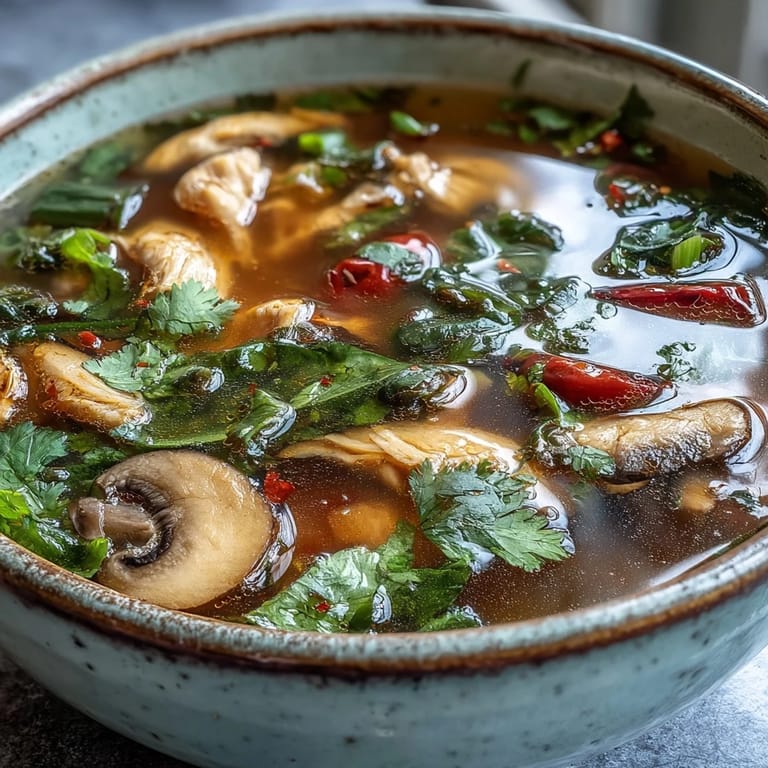
- Remove from heat and, if you prefer a cleaner look, fish out the lemongrass, galangal, and lime leaves (though leaving them in is fine). Ladle the soup into warm bowls and scatter cilantro, sliced spring onions, and lime wedges on top—these fresh garnishes are what make each spoonful feel alive.
 Pin It
 One evening, I made this soup for my grandmother, who'd grown up eating it in Isaan but hadn't had a proper bowl in years. She tasted the first spoonful, went quiet for a moment, then asked me to make a second pot because she wanted to share it with her neighbor—and watching her eat something that connected her back to her own kitchen felt like the highest compliment any recipe could receive.
Why Fresh Aromatics Matter
The difference between fresh lemongrass, galangal, and lime leaves versus their dried or bottled counterparts is the difference between a memory and a photograph. Fresh aromatics carry essential oils and subtle floral notes that dried versions simply can't replicate, no matter how long you simmer them. If fresh ingredients are hard to find in your area, Asian markets and specialty grocers often have them frozen, which preserves the flavor far better than drying and costs less than fresh.
Customizing Your Tom Yum
The beauty of this soup is how easily it bends to what you have on hand or what your taste buds crave. Some people swap the chicken for shrimp, which cooks faster and adds a sweet brininess that plays beautifully against the sour and spicy; others add a splash of coconut milk just before serving for richness. The core flavor profile stays the same, but the dish becomes yours to shape.
Timing and Temperature Tips
Tom Yum is one of those soups that tastes even better the second day because the aromatics have had more time to surrender their flavors to the broth. However, the fresh garnishes—cilantro, spring onions, and lime—should always be added right before eating, so they don't wilt or lose their brightness. The entire soup comes together in under 40 minutes from cold pan to ladle, which means you can serve restaurant-quality food on a weeknight without hours of prep.
- Smash your aromatics right before they go into the pot so their oils are at their peak.
- A gentle simmer keeps the broth clear and the chicken tender; a rolling boil clouds everything and toughens the meat.
- Taste and adjust seasoning at the end—this is the step that separates home cooking from guessing.
 Pin It
 This soup tastes like comfort that speaks multiple languages—it warms you from the inside while waking up your palate with every spoonful. Once you've made it once, you'll find yourself craving it on cold afternoons and making it for friends who'll ask for the recipe.
Recipe FAQs
- → Can I make Tom Yum Chicken less spicy?
Yes, simply reduce the number of birds eye chilies or remove the seeds before adding them to the broth. You can also serve the chilies on the side so each person can adjust the heat level to their preference.
- → What can I substitute for galangal?
Fresh ginger can be used as a substitute, though it will provide a slightly different flavor profile. Use the same amount as galangal. If you can find dried galangal, it works well when fresh is unavailable.
- → Can I use chicken breast instead of thighs?
Absolutely. Chicken breast works well in this soup. Slice it thinly and be careful not to overcook it, as breast meat can become dry more quickly than thighs. Simmer just until cooked through.
- → How do I store leftover Tom Yum Chicken?
Store in an airtight container in the refrigerator for up to 3 days. The flavors will continue to develop. Reheat gently on the stovetop and add fresh lime juice and herbs before serving for the best taste.
- → What type of mushrooms work best?
Oyster and straw mushrooms are traditional choices, but button, cremini, or shiitake mushrooms also work wonderfully. Choose mushrooms that hold their shape well when simmered in the broth.
- → Can I make this soup vegetarian?
Yes, replace the chicken with firm tofu or additional vegetables, use vegetable stock instead of chicken stock, and substitute soy sauce or tamari for the fish sauce to maintain the savory umami flavor.